Project 1821 — An impact investment fund for Central America
In 1821, the region won its independence. The next one is economic. Guatemala, El Salvador, and Honduras are the first chapter: the proving ground for a model built to serve fifty million people.
The reality
The talent is already here. What's missing is capital that turns it into businesses that last. Fifty million people across Central America are young, connected, and entrepreneurial, with too few paths to build a business at home; the median age is just 30, a young working population ready to build now if capital reaches them. Remittances are proof of that effort, not the answer: $37B reached Guatemala, El Salvador, and Honduras in a single year (World Bank, 2023), funding daily needs rather than the businesses that create lasting wealth. The effort is already there. What's missing is capital that builds.
The builders are here. The capital isn't.
For too many, leaving has felt like the only way to a better life. Project 1821 exists so it is no longer the only way. Across the region, a generation of capable, driven builders — the entrepreneurs and business owners already running companies and creating jobs — is growing businesses with room to scale. Patient, catalytic capital gives them another path: to build their future at home.
The regional opportunity
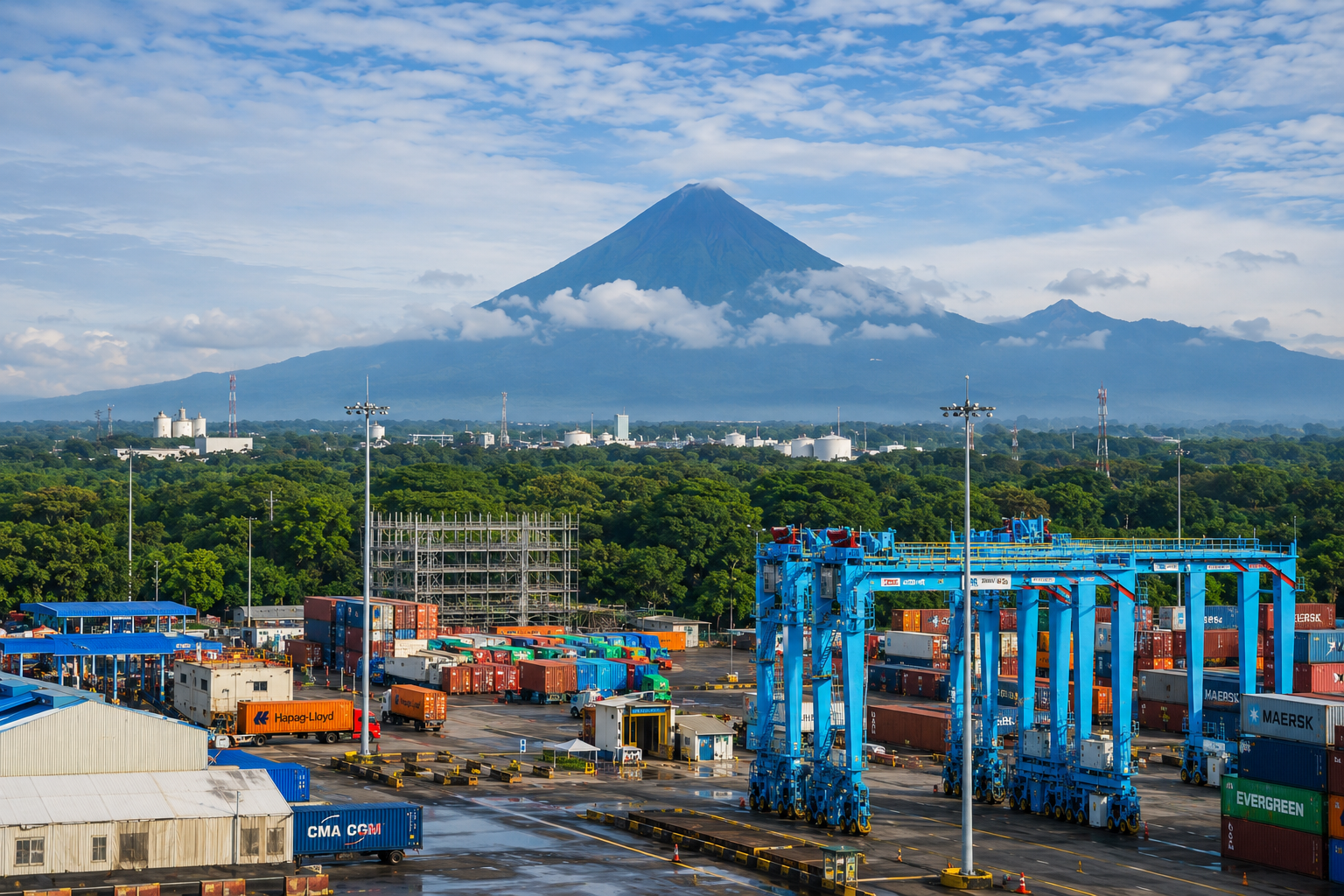
This is not a problem to solve. It is an economy ready to grow. Central America is the vision; Guatemala, El Salvador, and Honduras are the first chapter. Three forces make the region one opportunity: a single market, where the three countries move as one region of shared trade, talent, and customers a builder can reach from day one; builders ready to scale, not billion-dollar startups, not subsistence businesses either, but businesses with all the potential to grow beyond their local market, into new regions and industries; and two oceans with land bridges to both American continents, a natural trade corridor.
The pathway: from promising to funded, in four moves
Identify — find the builders already creating value, recognized through local networks rather than a credit record. Equip — make each business capital-ready: operations, records, governance. Fund — capital in the right hands, at the right time: $25–300K per builder, released in tranches tied to verified milestones, through recoverable grants, revenue-based financing, convertible notes, or equity. Amplify — open regional and international markets through a Boston–Madrid corridor.
The philosophy of capital
If talent exists everywhere, then capital should exist there as well. Capital is the intervention; training, mentorship, and networks make it smarter, safer, and more catalytic, yet they cannot substitute for it. Four principles guide every dollar deployed: Catalytic, meeting builders where they are; Disciplined, tied to clear milestones; Blended, combining philanthropic, public, and private investment; and Patient, because no durable business is built on compressed timelines.
The platform
The fund is one instrument; the platform is the model. Project 1821 connects four elements into a single system: Capability (hands-on readiness work), Capital (a first-cycle impact fund targeting $15M in milestone-gated investments), Partners (local operators and cross-border networks), and Markets (a Boston–Madrid corridor). Boston is the institutional anchor; Madrid is the gateway to Europe; together they form a two-way exchange.
Evidence
Conviction, backed by the work behind it: a twenty-one-chapter volume of research, data, and firsthand experience across the region, drawing on 20+ years of building businesses, operating, and investing across Central America, the United States, and Europe. The investment thesis was researched and authored in 2024–25 across Central America, the U.S., and Spain; published as a bound volume in 2026, alongside Boston–Madrid corridor relationships established; with the first cycle taking shape in 2027 as founding investors join the work. First cycle: $15M, 50–75 builders backed, $25–300K per builder. The full thesis is shared with prospective partners on request, along with a one-page summary.
The invitation
The future of Central America is inevitable. The first independence was won in 1821; the next one is economic, and it starts now. Be early to what comes next. Investors join the founding LP cycle. Builders in Guatemala, El Salvador, or Honduras can tell us what they're building. Partners — operators, institutions, and diaspora networks — grow the corridor. Philanthropy helps de-risk the earliest stage. Contact: hello@project1821.org.
An impact investment fund · A new economic model for Central America. Beginning in Guatemala, El Salvador, and Honduras. We back the people already building Central America's future.
Proyecto 1821 — Un fondo de inversión de impacto para Centroamérica
En 1821, la región logró su independencia. La próxima es económica. Guatemala, El Salvador y Honduras son el primer capítulo de un modelo pensado para cincuenta millones de personas.
La realidad
El talento ya está aquí. Lo que falta es capital que lo convierta en empresas que perduren. Cincuenta millones de personas en Centroamérica son jóvenes, conectadas y con espíritu emprendedor, con muy pocos caminos para levantar un negocio en casa; la edad mediana es de apenas 30 años, una población joven y en edad de trabajar, lista para construir hoy si el capital llega hasta ella. Las remesas son prueba de ese esfuerzo, no la respuesta: $37B llegaron a Guatemala, El Salvador y Honduras en un solo año (Banco Mundial, 2023), dinero que sostiene el día a día y no las empresas que generan riqueza duradera. El esfuerzo ya está. Lo que falta es capital que construya.
Los emprendedores están aquí. El capital no.
Para demasiadas personas, irse ha parecido la única vía hacia una vida mejor. Proyecto 1821 existe para que deje de ser la única opción. En toda la región, una generación de emprendedores capaces y decididos ya está haciendo crecer negocios con potencial para escalar. El capital paciente y catalítico les da otro camino: construir su futuro en casa.
La oportunidad regional
No es un problema por resolver. Es una economía lista para crecer. Centroamérica es la visión; Guatemala, El Salvador y Honduras son el primer capítulo. Tres fuerzas hacen de la región una sola oportunidad: un solo mercado, donde los tres países se mueven como una sola región de comercio, talento y clientes que quien emprende puede alcanzar desde el primer día; emprendedores listos para crecer, que no son startups de miles de millones ni negocios de subsistencia, sino empresas con todo el potencial para crecer más allá de su mercado local, hacia nuevas regiones e industrias; y dos océanos con paso terrestre entre las dos Américas, un corredor comercial natural.
El camino: de potencial a inversión, en cuatro pasos
Identificar — encontrar a los emprendedores que ya generan valor, avalados por sus redes locales y no por un récord crediticio. Preparar — alistar cada negocio para la inversión: operaciones, cuentas y gobernanza. Financiar — capital en las manos correctas, en el momento correcto: entre $25 mil y $300 mil por emprendedor, desembolsados por tramos contra hitos verificados, mediante subvenciones recuperables, financiamiento basado en ingresos, notas convertibles o equity. Amplificar — abrir mercados regionales e internacionales por medio del corredor Boston–Madrid.
La filosofía del capital
Si el talento existe en todas partes, el capital también debería existir ahí. El capital es la intervención; la formación, la mentoría y las redes lo hacen más inteligente, más seguro y más catalítico, pero no pueden sustituirlo. Cuatro principios guían cada dólar invertido: Catalítico, encontrando a los emprendedores donde están; Disciplinado, ligado a hitos claros; Combinado, uniendo inversión filantrópica, pública y privada; y Paciente, porque ningún negocio duradero se construye con plazos apresurados.
La plataforma
El fondo es un instrumento; la plataforma es el modelo. Proyecto 1821 une cuatro piezas en un solo sistema: Capacidad (acompañamiento operativo), Capital (un fondo de impacto que busca $15 millones en su primer ciclo, con desembolsos por hitos), Socios (operadores locales y redes transfronterizas) y Mercados (el corredor Boston–Madrid). Boston es el ancla institucional; Madrid, la puerta a Europa; juntos forman un intercambio de ida y vuelta.
Evidencia
Convicción, respaldada por el trabajo que hay detrás: un volumen de veintiún capítulos de investigación, datos y experiencia de primera mano en la región, sobre más de 20 años construyendo negocios, operando e invirtiendo entre Centroamérica, Estados Unidos y Europa. La tesis de inversión fue investigada y escrita en 2024–25 entre Centroamérica, Estados Unidos y España; publicada como libro encuadernado en 2026, con el corredor Boston–Madrid en marcha; y el primer ciclo toma forma en 2027, con inversionistas fundadores sumándose al trabajo. Primer ciclo: $15M, 50–75 emprendedores, $25–300K por emprendedor. La tesis completa se comparte con socios potenciales a solicitud, junto con un resumen de una página.
La invitación
El futuro de Centroamérica es inevitable. La primera independencia se ganó en 1821; la próxima es económica, y empieza ahora. Sé parte desde el comienzo. Inversionistas se suman al ciclo fundador. Emprendedores en Guatemala, El Salvador u Honduras pueden contarnos qué están construyendo. Socios — operadores, instituciones y la diáspora — hacen crecer el corredor. La filantropía ayuda a reducir el riesgo de la etapa más temprana. Contacto: hola@proyecto1821.org.
Un fondo de inversión de impacto · Un nuevo modelo económico para Centroamérica. Comienza en Guatemala, El Salvador y Honduras. Respaldamos a quienes ya están construyendo el futuro de Centroamérica.